Same Pitch, Different Starting Points: What a Mixed-Ability Saturday Taught the Draconians
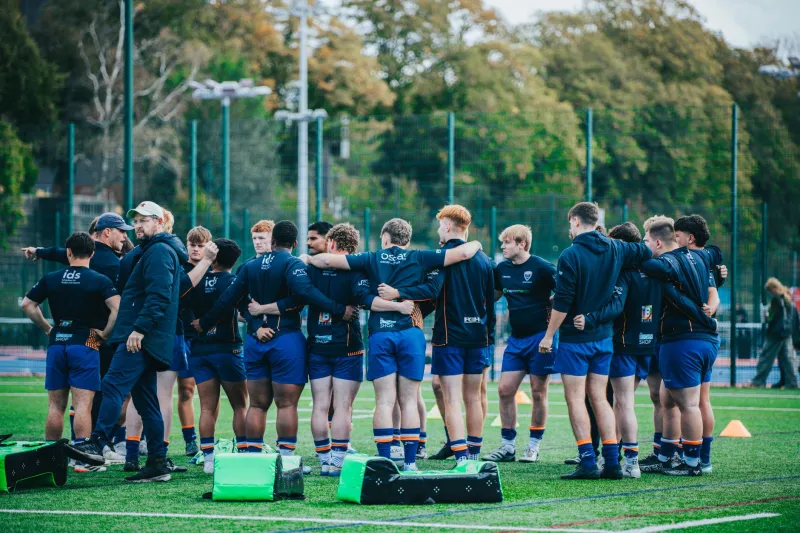
There is a moment in every mixed-ability session when the pitch goes quiet for a second. Not the awkward quiet of a drill that has not landed, or the hush before a big match. More the sound of people working something out. On a grey November Saturday, Cardiff Draconians had one of those moments — and then the noise came back louder than before.
The session was not a showcase. Nobody had printed a manifesto. It was a normal club Saturday with an unusually wide spread of players: teenagers home from college, a couple of parents who had not laced boots in years, seasoned regulars, and a handful of first-timers who had spent the week worrying about being the least experienced person on the pitch. The aim was simple enough: everybody plays, everybody contributes, nobody spends the morning pretending to be invisible.
A Saturday With No B-Team
The easiest way to run a mixed session badly is to split the group into 'strong' and 'the rest'. It looks tidy on a clipboard. It often feels rotten in the room. The Draconians tried something different this time: teams were mixed deliberately, roles were rotated, and the first ten minutes were spent on a warm-up that nobody could win. No sprints to the front, no scoring, no queue of people waiting to be picked.
That last bit matters more than it sounds. For a lot of adults, sport still carries the memory of being chosen last at school. A warm-up with no winner takes the sting out of arriving. One first-timer, Bethan, said she had almost turned back at the car park because she could see a football being pumped up and assumed the worst. 'I thought it was going to be one of those sessions where you get found out in five minutes,' she said. 'Instead we started with a passing game where the whole point was to keep the ball moving, not to smash it past somebody.'
The Tweaks That Did the Work
None of the adjustments were revolutionary. Most of them were the sort of thing a coach scribbles on the back of a hand ten minutes before kick-off. But together they changed the shape of the morning.
- Rolling substitutions, no fixed benches. Players could come off for a breather without it feeling like a punishment or a verdict. The touchline became a place to reset, not a place to hide.
- Two shorter games instead of one long one. Fatigue makes bad decisions for people. Splitting the session kept the standard up and the frustration down.
- A 'last pass' rule in the warm-up. Nobody could score alone. It forced the group to look up and find someone else, which is a decent definition of teamwork when you have not played together before.
- Clear roles, not fixed positions. Less experienced players were given jobs they could do well — hold a width, offer a safe pass, talk to the person beside them — rather than being parked somewhere and forgotten.
- Volunteers on the pitch, not just on the sidelines. Coaches joined in for parts of the session. That sounds small. It is not. It changes the atmosphere from 'us watching you' to 'we are all in this'.
What the Players Said
The most useful feedback came after the final huddle, when people were pulling on coats and pretending not to be too warm. Rhys, a regular who has played for years, said he had expected the session to feel slower. 'It was different, not slower,' he said. 'You have to think more. You have to talk more. I actually enjoyed it more than a normal blowout, because you are playing with people rather than past them.'
Another player, Iqbal, had come along with a friend and admitted he had spent the first half worrying about making a mistake. 'By the second game I forgot I was nervous,' he said. 'That is the whole thing, isn't it? You forget to be nervous because you are busy being part of it.'
And Bethan, the first-timer, stayed for tea afterwards. 'I will be back,' she said. 'I did not think I would say that at nine o'clock this morning.'
The Volunteer View
From the coaching side, the session required more planning than a standard run-out. Not much more, but more. Volunteers had to think about who would pair with whom, how long each game would last, and where the quiet players might need a nudge rather than a shout. One of the coaches, Sian, said the biggest lesson was to stop treating inclusion as a separate session. 'It is not a different kind of training,' she said. 'It is the same training with better decisions about who needs what. You still want people to stretch themselves. You just do not want them to stretch until something twangs.'
That line stayed with me. Inclusion is not about lowering the bar so far that nobody has to try. It is about making sure the bar is in a place where people can actually reach it — and then moving it a little when they are ready.
Takeaways for Other Grassroots Clubs
If your club is thinking about running a mixed-ability session, the Draconians' experience offers a few practical starting points.
- Design the first ten minutes for arrival, not assessment. People decide whether they belong before the first whistle. A no-win warm-up helps.
- Mix teams on purpose. Random teams are fine. Deliberately balanced teams are better. Do not let the same strong players clump together by habit.
- Give people jobs they can do. Confidence grows from competence. A clear, small role beats a vague instruction to 'just get involved'.
- Keep the bench moving. Rolling subs remove the fear of being stuck on the sideline for the whole session.
- Ask afterwards. A two-minute chat with players will tell you more than a clipboard ever will.
Why This Is the Version That Lasts
There is a lazy assumption that inclusive sport is sport with the edges sanded off. Saturday did not feel like that. It felt competitive in the right places and generous in the right places. People still wanted to win the small games. They still celebrated a good pass. Nobody was patronised. Nobody was carried.
The Draconians have always been a club that makes a noise. But the roar is not only about the scoreboard. It is about the fact that a first-timer can turn up on a cold November morning, survive the car park, find a game that fits, and leave planning to come back. That is not a softer version of sport. It is the version that lasts.