The Kit Locker Is Open: How Spare Boots and Unworn Tops Are Finding New Homes Across Cardiff
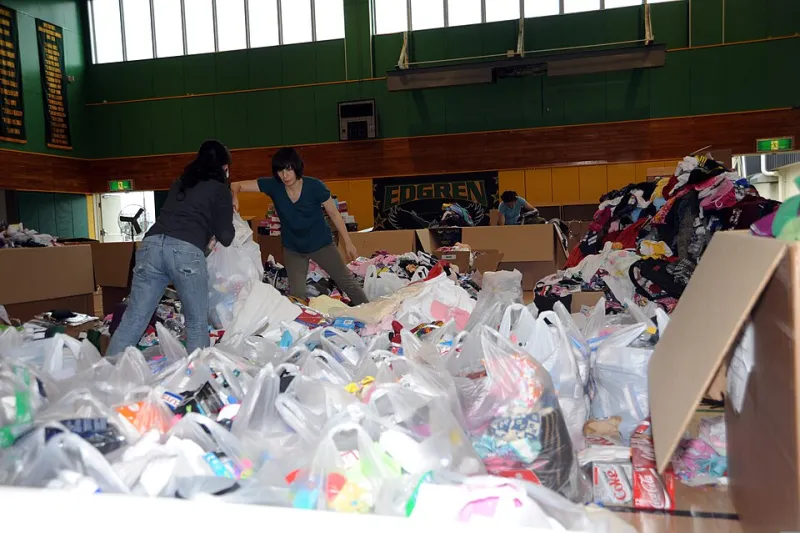
Photo: MC1 Matthew Bradley, Public domain, via Wikimedia Commons
There is a bin bag in a garage in Llanishen that has been doing nothing for roughly four winters. Inside it: a pair of size five boots with the studs worn flat along the outside edge, two training tops from a junior season nobody can quite put a date on, and a ball soft enough to fold in half. By any reasonable measure it is rubbish. By the Draconians' measure it is an opportunity waiting for a label.
Ahead of the 2026 winter season the club has opened what we are simply calling the kit locker. It is a stubbornly unglamorous push to move unused boots, tops, shin pads, gloves, socks and balls out of cupboards and into the hands of people in Cardiff who need them. No ribbon-cutting, no photoshoot on the halfway line. Just one club deciding that one city, one roar has to mean something on a wet Tuesday night in Splott, not only on a Saturday afternoon when the first team is winning.
The real maths of a spare pair of boots
A decent pair of junior boots will set a family back somewhere between thirty-five and seventy quid, and that is before the shin pads, the socks that go missing, the underlayer, the gloves and the waterproof that never quite waterproofs. Multiply it by two children and you are looking at a monthly food shop spent on footwear that will be outgrown by February.
Most of us know this because most of us have lived it. The result is a lot of perfectly usable kit sitting in bags, boots in lofts and shelves in sheds, guilty and untouched. Meanwhile, a child arrives at a first session in school trainers on a frosty pitch. They are cold, they are slipping, they are quietly embarrassed, and often they are not there the following week. That is the gap the kit locker is trying to close. Not because the club has spare cash swilling about, but because the city already owns the kit. It is just in the wrong cupboards.
How the locker actually works
There is no means test, no form to fill in and no queue to stand in. That is deliberate. The whole point is that asking for help should be easier than not asking.
Donations come in at club nights through the winter, at a table by the clubhouse door on Saturday mornings, and through a volunteers' WhatsApp group that has become unexpectedly busy. Everything is emptied out, checked, cleaned, paired up and sorted by size. Boots get brushed, laces get replaced where they need it, balls get pumped. Then it goes back out again, to whoever asks. Nobody writes down who took what. Nobody keeps a tally of who gave more than they took. It is a locker, not a ledger.
What people ask for is rarely what you expect
The headline item is boots, sure. But the requests that stick with you are the small ones. Socks, because a child will wear boots two sizes too big without complaint but will not wear the wrong colour socks to a school club. Shin pads in a junior size. Goalkeeper gloves, which are the single most expensive item in a young keeper's bag and the one most likely to be handed down half-chewed. A ball that holds air, so a kid can practise in the back garden without a parent driving them across town.
What stops a Cardiff player from playing is usually not the big ticket purchase. It is the small, silly, easy-to-solve thing that nobody thinks to ask about.
The six-a-side that very nearly wasn't
Earlier this autumn a group of parents in Grangetown tried to get a Sunday morning kickabout going for children who had drifted out of club football. They had a pitch, a handful of willing adults and a spreadsheet of interest. What they did not have was equipment: eight balls, two sets of bibs, and enough spare boots for the ones who would turn up without.
Two weeks after they asked, they had all of it. The under-eights team that started in September now has a full squad and one very tired volunteer coach who keeps saying it is the best thing he has done in years.
There is a similar story from a primary school in the east of the city, which wanted to run a lunchtime club so that the children who cannot get to an after-school session still get a game. A box of tops, a bag of balls and a dozen pairs of boots turned a good idea into a timetable entry.
The unglamorous bit nobody photographs
Sorting is the whole job, and it is not pretty. Opening a bag of boots last used three seasons ago is an experience best described as character-building. There is a technique to it: warm wash, no fabric softener, air dry away from the radiator, and a firm refusal to accept anything mouldy, cracked or structurally optimistic.
Then there is storage, which currently means a generous volunteer's shed and a boot room that smells like a school gymnasium. And transport, which means somebody driving a boot-full of boots across the city on a Sunday evening. None of this makes for a good photograph. All of it is why the thing functions.
What we are still working out
Honestly? Quite a lot. The winter demand spike is real, and it lands in the same weeks that donations slow to a trickle because everyone is skint in January. Sizes are uneven — a glut of size four, a permanent drought in size eleven. And the hardest group to reach is the one that will never ask: the family that quietly stops coming rather than admit they cannot kit out a second child.
That is why we would rather work with other Cardiff grassroots clubs than hoard the lot. If a club in the north of the city has a box of spare tops and a team in the bay needs them, that should be a two-message problem, not a dead end.
How to get involved
If you are having a clear-out before Christmas, do not bin it. Clean boots with life left in them, training tops, shorts, socks, shin pads without cracks, gloves and balls are all welcome. What we cannot use: anything mouldy, broken, or so worn that it will let a player down on a wet pitch.
Drop-offs run through the winter at club nights and on Saturday mornings, and there are sorting evenings for anyone who fancies a coffee, a laugh and a bin bag of size six boots. You do not need to be a member. You do not need to explain why you are there.
One club, one city, one roar. It starts with making sure nobody in Cardiff is left standing on the touchline for want of a pair of boots.