Un, Dau, Tri — Everyone In: The Small Welsh Words Making a Cardiff Matchday Feel Like Home
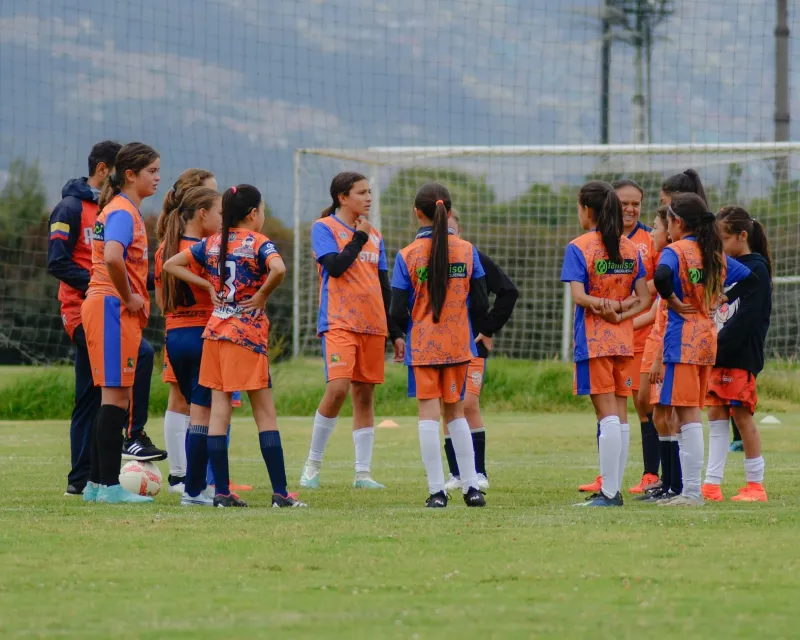
On a damp Saturday morning in Cardiff, the first thing you hear is not the whistle. It is a voice from the side of the pitch shouting 'Un, dau, tri — dewch i mewn!' The huddle tightens. A new player, still pulling on a borrowed bib, looks around, works out that this is not a secret code and steps in. That is the whole point.
A Language You Can Stand In
Bilingual matchdays can sound like a big idea. In practice, at Cardiff Draconians, it is a handful of words in places where people already look and listen. 'Croeso' on the tea table. 'Diolch' on the volunteer sign-in sheet. 'Bore da' at the gate. 'Yma' on the attendance list. A bilingual fixture board. A huddle count that starts in Welsh and finishes with everyone in.
None of this requires a committee, a consultant or a conference. It requires someone to print a sign, someone else to say the words out loud, and enough repetition that nobody feels they are being tested. The aim is not to turn a grassroots matchday into a language lesson. The aim is to make Welsh feel like part of the furniture — ordinary, useful, and belonging to everyone who turns up.
The Awkward Bit Is the Point
Nobody gets it right first time. A volunteer will pronounce 'diolch' slightly wrong. A player will hear 'dewch i mewn' and think it is a set-piece call. A supporter will try 'bore da' at two in the afternoon and laugh at themselves. That is fine. The worst version of bilingual matchdays is the version that feels like a test. The best is the version where a volunteer says 'diolch' and means it, and a newcomer says 'cheers' and means that too.
At the Draconians, the approach is not to wait until everything is perfect. It is to start with what people can manage. 'Diolch' is a good beginning. 'Croeso' is another. 'Da iawn' after a decent pass costs nothing. The point is not fluency. The point is familiarity.
What It Sounds Like on a Sunday
You do not need a long list. A handful of phrases, used in context, is worth more than a phrasebook nobody reads. 'Un, dau, tri' for the count. 'Yma!' when someone is here. 'Nesa!' when it is someone else's turn. 'Da iawn' when a teammate does something well. 'Dewch i mewn' when it is time to gather. Keep them small, repeat them often and let people hear them doing a job.
The post-match huddle is a good place to start because it already has a rhythm. 'Ar y cyfrif o dri — un, dau, tri!' is not complicated, and it gives everyone the same cue. If someone mangles the pronunciation, the huddle still works. If someone prefers to listen rather than speak, they still belong. That is the difference between a ritual and a gimmick.
A Practical Guide for Grassroots Clubs
If your club wants to try this, start smaller than you think. Pick three phrases, not thirty. Put them where people already look: the kettle, the boot rack, the fixture board, the changing-room door. Pair Welsh with English so nobody is locked out. Ask a Welsh speaker to check the wording, but do not make them the official translator for the whole season. Share the load, credit the help and keep it human.
Do not turn it into a quiz. Do not hand out gold stars for pronunciation. Do not make Welsh the in-group password. A newcomer should be able to arrive, hear two languages, and still know exactly where to put their bag. If they feel tested, it is not working. If they feel welcomed, it is.
It also helps to keep the same words in the same places. Routine beats novelty. A 'diolch' at the tea hatch every week is worth more than a one-off Welsh-language matchday with a banner and a photographer. If you review it once a season and ask people what feels natural, you will probably find that the small things are the ones that stuck.
The Newcomer Test
Good bilingual matchdays pass a simple test: a new player can still find the changing room, the bibs and the tea. One newcomer at a recent session asked whether he should say 'bore da' or 'morning'. The answer was both. Someone handed him a bib and asked 'Ti'n chwarae?' He nodded. That was his first Welsh word at the club, and it was not really a word at all. It was a question that included him.
That is the standard to aim for. Not perfect grammar. Not a performance for visitors. Just enough Welsh in the ordinary places that nobody has to make a speech about it. A language that lives only on official signs can feel ceremonial. A language that lives on a touchline, in a huddle, over a tray of teas, starts to feel like home.
Why It Belongs on a Muddy Pitch
Cardiff is a bilingual city on paper and a complicated one in practice. Welsh can feel ceremonial — the school assembly, the official sign, the welcome page of a document. None of that is bad. But ceremony is not the same as everyday. A grassroots club can make Welsh feel everyday because a grassroots club is already everyday: muddy boots, shared lifts, half-time oranges, someone's dad on the whistle.
When 'diolch' is said over a tray of teas, it stops being a performance and starts being a habit. When 'dewch i mewn' is shouted across a pitch, it becomes part of the sound of the club. The Draconians' roar is not a single language. It is a sound made by people who turn up. In 2026, that sound includes 'un, dau, tri' and 'dewch i mewn' and 'da iawn' and a dozen other small words that nobody claps for. That is how a language stays alive — not on a plaque, but on a touchline. One club, one city, one roar. Bilingual, if we keep saying it.