The Golden Segment: What Cardiff Draconians Do Before Anyone Says a Word

Photo by Photo by martin fenton on Unsplash on Unsplash
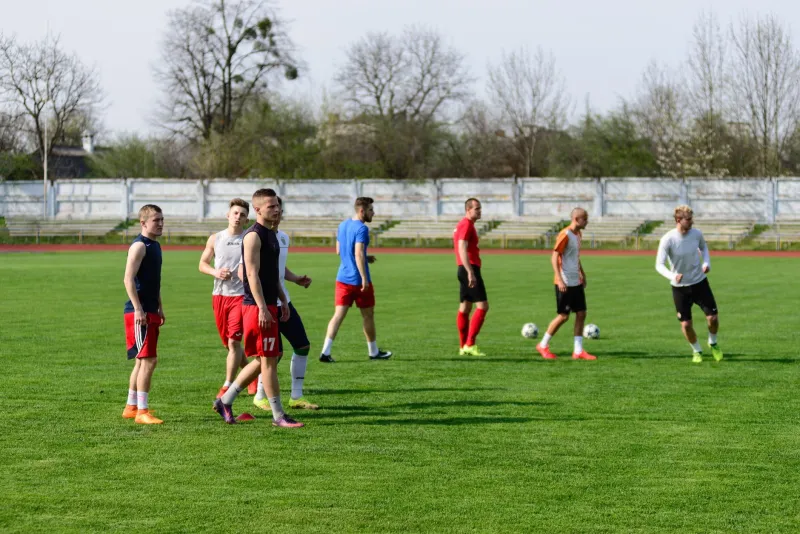
It is a damp Saturday in November 2026, and the pitch has that familiar Cardiff weight to it: soft underfoot, a bit of drizzle in the air, the smell of wet grass and deep heat. The whistle goes for half-time. Players drift towards the touchline, chests heaving, boots caked. And before the coach says a word, someone is already peeling.
That is the moment. Not the team talk. The orange.
At Cardiff Draconians, the half-time orange is not a performance supplement or a piece of sports science. It is a small ritual with a big job. It cools the temperature of a match. It gives people something to do with their hands. It turns a group of individuals who have just been shouting at each other into a group of people passing segments down a line. The club has plenty of modern ideas — warm-ups, recovery, communication, all the rest — but this is the one that has survived every kit change and every new season.
It Starts With a Shopping Bag, Not a Clipboard
The fruit rota is not glamorous. It lives in a group chat, usually with a message that reads something like: oranges needed Saturday, can anyone cover? The backroom crew will tell you it is the least dramatic job in the club and the one they notice most when it is missing.
Nia, whose son plays in one of the junior sides, has become the unofficial keeper of the net bag. She buys them on a Friday, cuts them on a board at home, and brings them in a tub that has seen better days. “You can tell a lot about a club by what happens at half-time,” she says. “If everyone disappears to their own water bottles and their own thoughts, you have got a job to do. If someone is handing round orange segments, you have already started the job.”
Gareth, a long-serving player who has been with the Draconians through more seasons than he cares to count, puts it more simply. “You come in at half-time and you are buzzing or you are fuming. Either way, you are not really listening. Then someone passes you a bit of orange. It buys everyone thirty seconds. That thirty seconds is the team talk.”
The Slice Is the Handover
There is a quiet choreography to it. The tub comes out. The first player takes a segment, then passes the tub on. Nobody announces it. Nobody makes a speech about it. The coach waits. That is the key part. The coach waits.
In that pause, the match loosens its grip. Players who were locked into the last ten minutes start to look around. A sub who has not had a touch yet gets a segment and a nod. An injured player on the sideline gets one too. Even the ref, if they are close enough and the game has been played in the right spirit, might be offered the tub. It is a small thing, but it says: you are part of this, not just the scoreboard.
“You cannot rush a peel,” says one of the Draconians’ backroom helpers, laughing. “You can try. But if you are standing there with a bit of orange peel in your hand, you are not giving a rousing speech. You are just a person at a pitch, same as everyone else. That is good for a team.”
More Than Vitamin C
The obvious joke is that it is just fruit. And, yes, it is just fruit. But grassroots sport is built on these small, repeatable acts. They are the things that make a club feel like a club rather than a fixture list with shirts. The orange is cheap. It is easy. It is not a burden. It is also a signal that someone thought about you before you arrived.
For younger players, it is often the first job they get. A junior team will watch the seniors pass the tub and copy it. A parent will bring a spare bag because they know the rota has a gap. A new player will learn that nobody is too important to hold the tub while someone else takes a segment. In a city with as many sporting options as Cardiff, that kind of detail is part of what keeps people coming back.
The ritual also has a practical edge. Oranges are easy to share, easy to bin, and easy to carry in a kit bag that already smells of mud and ambition. They do not need a fridge. They do not need a table. They work on a touchline in Roath, a pitch in Llandaff, or a corner of a leisure centre car park when the weather has decided to make its own rules.
Keep the Small Things Going
The Draconians are not unique for having a half-time orange. Plenty of clubs do it. But the club’s version has a particular Cardiff flavour: slightly chaotic, entirely unpretentious, and held together by people who are not looking for credit. The point is not to turn it into a brand. The point is to keep it going.
So this is a gentle rallying call. If you are part of a team, a club, a parents’ group or a backroom crew, do not let the small rituals slide. Bring the fruit. Cut it the night before. Pass the tub. Wait a beat before you speak. You do not need a whiteboard to reset a team. Sometimes you just need a golden segment and someone willing to hand it over.
One club, one city, one roar — and, at half-time, one shared tub doing the quiet work.