The People Who Arrive First and Leave Last: Meet the Backroom Crew Behind Every Draconians Weekend
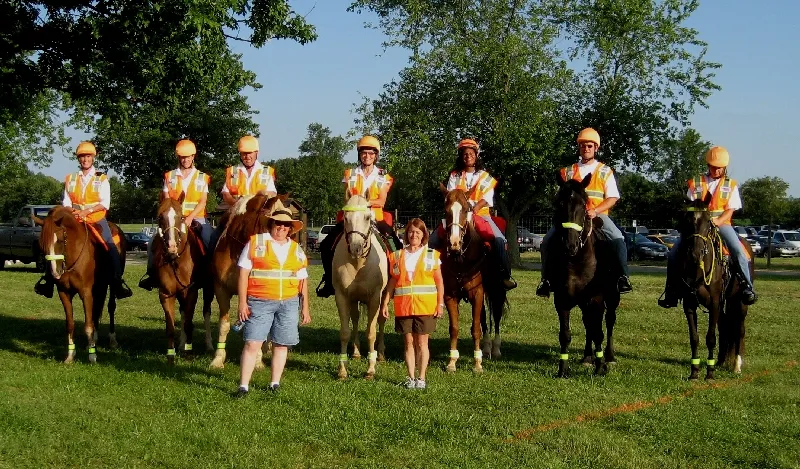
Photo: Marie Lester, CC BY-SA 4.0, via Wikimedia Commons
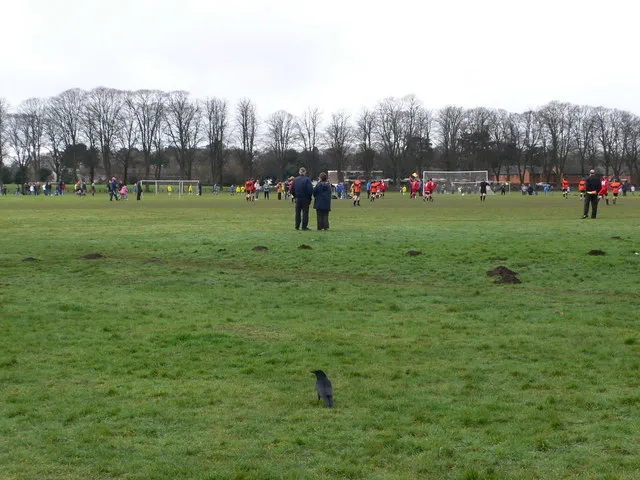
At 8:15 on a Saturday morning, the ground is empty and the air smells of wet grass and diesel. One figure in a hi-vis jacket is dragging a line marker across the surface, checking the width against a peg that was hammered in three seasons ago. Nobody applauds. Nobody is watching. In four hours, a couple of hundred people will use what this person is doing, and most of them will never know it happened.
That's the deal with volunteering at a sports club. The work is invisible by design — which is precisely why it deserves a closer look.
The list nobody puts on a fixture card
Ask a supporter what makes a matchday and they'll say the players. Ask anyone who runs a club and they'll hand you a very different list.
Before a ball is kicked, someone has to unlock the gates, check the changing rooms, put out the bins and make sure the medical bag is stocked and in date. Someone has to set up the welcome desk and the card reader, test the floodlights in winter, drag the portable goalposts out, sweep the dugouts, and ring the visiting club to confirm they're actually coming. Afterwards, someone has to collect it all in again, bag up the lost property, count the takings and lock up in the dark.
Between those two bookends sits the stuff nobody advertises: the lift rota for players without cars, the WhatsApp message at nine on a Friday night sorting out who's bringing a spare pair of boots, the parent who's volunteered to do first aid cover because the qualified first-aider is away at a wedding.
None of it appears on a scoreline. All of it is load-bearing.
The pitch doesn't prepare itself
Pitch prep is the least glamorous job in the club and arguably the most consequential. Markings worn away by mid-October, a corner flag that's lost its spring, a surface that drains badly after a week of Cardiff rain — these things don't fix themselves, and a badly prepared pitch is a safety issue before it's a sporting one.
There's a small group who take this on through the 2026 season, usually in the hour before anyone else arrives. They've developed their own shorthand: which corner floods, which mower setting to use, when to leave well alone. It's accumulated knowledge, passed along informally, and it would take a newcomer months to learn from scratch.
It's also, by all accounts, oddly satisfying. There's a particular pleasure in standing back and looking at freshly marked lines before the chaos begins.
Teas, lifts and the welcome desk
If pitch prep is the quiet work, hospitality is the loud one — and it's where the club's character gets set.
The welcome desk is the first thing a nervous newcomer sees. Whoever's on it is, in effect, the face of Cardiff Draconians for that person's entire first impression, and the volunteers who run it take that seriously. They learn names. They spot the person standing slightly apart. They know which player's mum makes the better traybake and which visiting team travels with a coach full of hungry teenagers.
Then there's the tea urn. It sounds trivial. It isn't. In cold weather, a hot drink at half-time is a small act of care that says you were expected, and the queue around the hatch after the final whistle is where half the club's social life actually happens.
The lift rota is the least visible piece of all. Players without cars, younger members travelling from the far side of the city, someone with a knee injury who can't manage the walk from the bus stop — a handful of drivers quietly absorb all of this, week after week, without it ever being called anything as grand as logistics.
Why people keep doing it
Ask volunteers why they give up their Saturdays and you rarely get a noble answer. You get a practical one, and then something more interesting underneath.
Some do it because their own playing days are behind them and they wanted to stay in the game in some form. Some started when their child joined and found they liked the people more than they expected. Some were on the receiving end — a difficult year, a bereavement, a move to a new part of Cardiff where they knew nobody — and found that turning up to do a small job on a Sunday morning gave the week a shape.
That last point comes up a lot. Volunteering at a club is one of the few social entry points that doesn't require you to be good at anything. You can belong to a sports club without playing, coaching or supporting particularly loudly. You just have to be useful for an hour.
The skills people pick up along the way are real, too: running a cash float, managing a first aid kit, marshalling a car park, dealing with a difficult phone call from a visiting club. Several volunteers have found that a season of club admin reads surprisingly well on a CV.
It asks for less than you'd think
There's a persistent myth that volunteering means a committee seat and a monthly meeting. In practice, most of the roles at Draconians are bite-sized.
An hour setting up. A lift to an away fixture three times a season. One Saturday morning on the tea hatch. A whip-round for first aid supplies. Taking a turn on the gate. The club would far rather have twenty people doing a small thing occasionally than two people doing everything until they burn out — a lesson learned the hard way, as it is at most community clubs.
If you've got a skill the club doesn't know about yet — a van, a first aid certificate, a knack for spreadsheets, a garage with space for kit — say so. It will get used.
More than the eleven on the field
Cardiff Draconians' identity isn't really built on results. Results come and go, and nobody remembers the score from a wet Tuesday in February. What people remember is whether someone met them at the gate, whether there was a cup of tea waiting, whether the pitch was safe, whether they got home.
The hi-vis jackets aren't the supporting cast. They're the reason there's a match to watch at all.
If you've ever stood on the touchline thinking you'd like to be part of it without lacing up boots, this is your open door. Put your name down for a single Saturday and see how it feels. The gates need unlocking at eight.