Nervous Boots, Warm Welcome: What a First Draconians Session Actually Feels Like
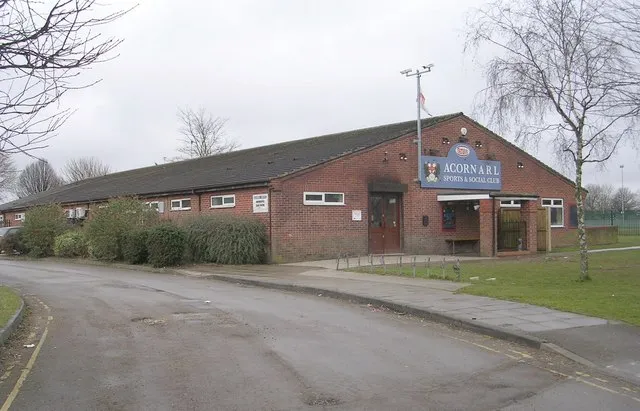
Photo: Betty Longbottom, CC BY-SA 2.0, via Wikimedia Commons
There's a specific kind of quiet that settles over a car park at ten to seven on a Tuesday. Engine off. Kit bag on the passenger seat. A small voice asking whether you've made a terrible mistake.
Almost everyone who now turns up to a Draconians session twice a week has sat in that exact spot. So if that's you this evening, this one's for you.
You don't need to be good. You just need to turn up
Let's clear this up first, because it's the thing that stops most people getting out of the car. Nobody at Cardiff Draconians is keeping a ledger of how well you kick, catch, pass or run. The 2026 intake has already included people who hadn't touched a ball since school PE, people who played something completely different for years, and people who simply fancied doing more with their Wednesday evenings than a boxset.
What the club actually asks for is a bit of effort and a reasonable dose of good humour. That's the whole entry requirement.
What to actually bring
Keep it simple. You don't need new kit, and you definitely don't need to spend a fortune before you've even met anyone.
- Footwear that suits the surface. The club will tell you whether it's grass or artificial when you get in touch — trainers or astros are perfectly fine for a first session if you're unsure.
- A water bottle. Obvious, but regularly forgotten. There's a tap on site; there isn't always a spare bottle.
- Layers you can shed. Cardiff weather in November does what Cardiff weather does. A waterproof layer over a t-shirt beats one thick jumper every time.
- Nothing precious. Phone in a zipped pocket or left in the changing room, no jewellery, no watch you'd be upset to lose.
- A fiver for afterwards. Teas and toast live in a honesty tin, and they're part of the experience.
If you've got a mate who's been wavering, bring them. Two nervous people is infinitely better than one — and the welcome desk genuinely notices the difference.
The first twenty minutes, minute by minute
Here's the bit nobody tells you, and it's the bit that settles the nerves quickest: the start of a session is deliberately unglamorous.
You'll arrive, you'll be spotted, and someone in a club top will walk over rather than waiting for you to hover awkwardly by the gate. There's a sign-in sheet — first-timers get a different colour clipboard, which sounds bureaucratic but in practice means three separate people will know your name within five minutes.
Then it's a lap, a few dynamic stretches, and a short game that involves more laughing than stretching. The warm-up is designed to be social. It's where you find out who's new, who's been coming for a decade, and who's nursing a knee from a Sunday kickabout.
By seven-fifteen, you'll have spoken to half the group without really noticing you were doing it.
What the drills are really like
The word "drills" puts people off. It conjures images of clipboards and shouting. In reality, a typical Draconians session breaks down into skill stations, a small-sided game, and a conditioning block that scales to whatever you've got in the tank.
Skill stations are led in pairs and small groups, not in front of a watching crowd. Small-sided games are short, mixed, and reshuffled constantly — which conveniently means nobody's keeping score of your individual performance, because nobody can remember who was on which team.
Expect to be asked to try things. Expect to be a bit rubbish at one of them. Expect the person next to you to be a bit rubbish at a different one.
How mixed-ability works in practice
The phrase "inclusive sport" can sound like a promise nobody's actually checked. At Draconians it's more of a working method, and it comes down to three habits.
First, sessions are pitched to more than one level. There's always a version of an activity that works for someone returning from injury, someone brand new, and someone who's been playing for fifteen years.
Second, contact and intensity are optional rather than assumed. Nobody is judged for taking the lower-impact option, because the lower-impact option is built in, not bolted on.
Third, positions and roles rotate. The person who's never played gets a proper job in the game, not a corner to stand in. That single detail is why people come back.
The small details that turn a one-off into a habit
There's no single magic ingredient, but a few things do the heavy lifting.
Someone messages you the next day. Not a mass email — an actual message, asking how the shoulder felt or whether you're free next week. The group chat adds you rather than leaving you to ask. You get walked to the gate.
And then there's the post-session bit: the tea, the toast, the ten minutes of nonsense chat that has nothing to do with sport at all. That's where the club actually lives. A lot of people come for the session and stay for the twenty minutes afterwards.
The practical bits
Sessions run through the evening, with a warm-up at the stated start time and a proper finish, so buses and lifts home are manageable. There's parking on site, and several regulars come by bike or on the bus — the club will happily point you towards the nearest stop or a lift share from your side of the city if you ask.
First sessions are free. Kit comes later, if you stick around, and the club keeps a stash of spare tops for exactly this reason. Everything you need to know about the 2026 calendar, session times and how to register your interest is on the contact page — a short message is enough.
Turn up once. That's the whole ask
One session. That's the only commitment anyone will ever ask of you in advance. If it's not for you, you'll have lost an evening and gained a story. If it is — and for most people it is — you'll wonder why the car park nerves got so much airtime in your head.
The gates are open. Somebody's already putting the cones out.