Miskicks, Mud and Mirth: The Cardiff Draconians' Case for Glorious Imperfection
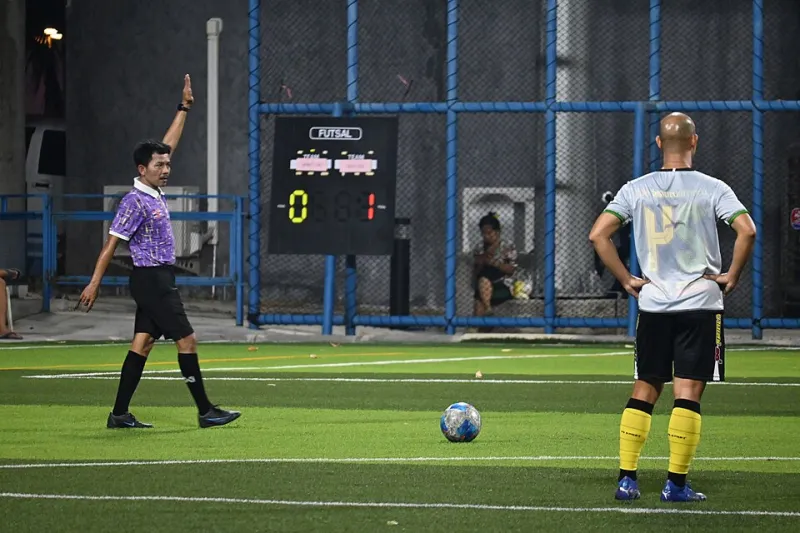
Photo: PattayaPatrol, CC BY-SA 4.0, via Wikimedia Commons
There is a particular sound that follows a truly spectacular miskick. It is not a groan, exactly. It is closer to a shared intake of breath, a half-second of silence, and then a roar of laughter that starts at the touchline and rolls all the way to the far post. At Cardiff Draconians, that sound is not the opposite of sporting ambition. It is part of the furniture.
Most clubs measure themselves by the honours board. The Draconians measure themselves by the stories that survive the car journey home. And more often than not, the story is not the neat finish or the perfectly timed tackle. It is the time the ball ended up in the Taff, the back-pass that beat its own keeper, or the substitute who warmed up for twenty minutes and then tripped over the corner flag.
The Own Goal That Got Its Own Song
Ask around the club and one tale comes up again and again: a Tuesday-night cup tie under a dull sky, a routine clearance, and a defender who — in his own words — “heard the shout, ignored the shout, and then invented a new direction for the ball.” It rolled, with painful slowness, past a keeper who had already started walking away in disgust.
“I wanted the ground to open up,” says Rhys, a Draconians regular who has been playing since the club's early days. “But by the time I got back to the halfway line, someone on the bench had already given it a name. By the next week it had a song. I still get asked about it more than any goal I've ever scored.”
That is the strange arithmetic of grassroots sport. A goal is a moment. A glorious mistake is a possession. It belongs to everyone. The person who made it may wince, but the club adopts it, polishes it, and brings it out at the most inconvenient moments — usually when the culprit is trying to look serious before a match.
Mali, who plays in midfield and describes herself as “the club's unofficial archivist of nonsense,” says the retelling is never meant to sting. “There's a rule,” she explains. “You can laugh at someone's mistake only if they are laughing too. And if they're not laughing yet, you have to wait. Give it a week. Then it's fair game.”
Why the Wobbles Matter More Than the Highlights
There is a temptation to frame all this as mere banter, the sort of thing that happens at any club with a decent sense of humour. But the Draconians' affection for the near-miss runs deeper than that. It is a statement about who gets to belong.
Grassroots football is not a highlights reel. It is a mix of people who played at school and never stopped, people who started at thirty-five because a friend dragged them along, and people who are still working out which end of the boot goes where. If the club only celebrated perfection, most of its members would spend their Saturdays apologising. Instead, the mistake becomes a kind of entrance fee — proof that you are human, that you are here, and that you are not going anywhere just because the ball bounced off your shin.
Gareth, who helps run the kit and has seen more Draconians sessions than he can count, puts it simply. “You can tell a lot about a club by what happens after an air-shot,” he says. “If everyone goes quiet and looks at the floor, you've got a problem. If someone shouts 'unlucky' and someone else asks if you meant it, you're fine. We're fine.”
That is not to say the Draconians don't want to win. They do. There is real effort in the warm-ups, real frustration when a lead slips, and a genuine desire to improve. But the club has made a quiet peace with the fact that improvement and embarrassment tend to arrive in the same bag. You cannot learn to strike a ball properly without first discovering several ways not to.
The Museum of Nearly
Every club has its folklore. At the Draconians, that folklore has a distinctly wonky shape. There is the winger who once beat three players and then the corner flag. There is the goalkeeper who saved a penalty and immediately threw the ball into his own net while celebrating. There is the centre-back who, in a moment of great optimism, attempted a forty-yard diagonal pass and instead found a dog walker on the adjacent path.
These are not failures in the conventional sense. They are the club's shared property, the stories that do the work of a hundred icebreakers. A new player arrives, nervous and quiet, and within a fortnight someone has told them about the time the captain missed an open goal from six yards and then blamed the wind. The new player laughs. The new player relaxes. The new player stays.
“I think the mistakes are how we say 'you don't have to be brilliant to be one of us',” says Rhys. “That sounds soft, but it's actually quite practical. If you're worried about looking silly, you'll never take a risk. And if you never take a risk, you'll never get better. So we make it safe to look silly. Then we get better.”
What the Near-Miss Teaches a Newcomer
For anyone thinking about turning up to a Draconians session for the first time in 2026, the message is straightforward: your first touch does not need to be good. It needs to be yours. The club is not scouting for the next big thing. It is building a Saturday that people want to come back to.
That means the touchline welcomes the shanked clearance as warmly as the wonder goal. It means the post-match debrief can include both a serious note about marking at corners and a five-minute re-enactment of the time someone fell over the ball. It means the hall of almost is not a place of shame. It is a place of belonging.
And besides, the perfect goal is soon forgotten. It is the own goal that gets a song. It is the air-shot that becomes a nickname. It is the mud, the miskick and the laughter that make a club feel like a club rather than a fixture list. Cardiff Draconians have built something rare: a place where the worst moment of your Saturday can become the best story of your season. Bring your boots. Bring your sense of humour. The rest can take care of itself.