No Sprint Required: The Cardiff Session Giving Old Boots a Second Life
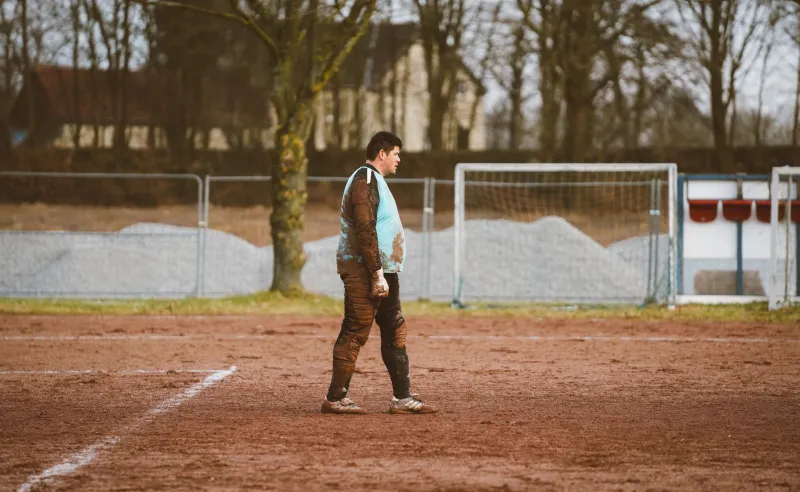
Saturday mornings at Cardiff Draconians usually arrive with a clatter: studs on concrete, kit bags landing in a heap, someone asking who has the pump. The club's newest hour begins differently. There is still a whistle, still a pitch, still the same dragon on the badge. But nobody sprints to warm up. Nobody pretends the hamstring is fine. And nobody is asked to prove they belong.
The walking sports hour is exactly what it sounds like: low-impact, social, played at a pace that lets conversation travel across the grass. It is designed for returning players, older neighbours, people coming back from injury, and anyone who had quietly filed their boots away under the stairs. In 2026, it is one of the clearest examples of how a grassroots club can grow without losing the thing that made it worth joining in the first place.
First whistle, no rush
By ten to eleven, the car park is already busy. A few people arrive in trainers rather than studs. One regular brings a flask large enough for a small committee. Another is carrying a folder of names and a quiet determination to get the teams balanced before anyone starts complaining.
The first ten minutes are not a warm-up in the traditional sense. There are no shuttle runs, no ladders, no barking. Instead, there is a gentle walk across the pitch, a few passes between people who have not met before, and a short explanation of the house rules: walk, don't run; keep it friendly; play the ball, not the person; and if you need a breather, take one. The whistle goes, and the hour starts with a soft, deliberate rhythm.
That rhythm is the point. Walking football strips out the sprint but keeps the shape, the passing angles and the small decisions that make the game absorbing. A well-timed sideways ball still matters. A clever run into space still earns a nod. The difference is that there is time to see it happen — and time to say well played before the next phase begins.
The rules that keep it moving
The session is not a free-for-all. Organisers keep a firm eye on the basics: no running, no reckless challenges, and no headers unless the group has agreed otherwise. Teams are mixed deliberately. Experience sits next to curiosity. Someone who played for years shares a tip with someone who has never kicked a ball in anger. The score, if anyone is keeping one, is rarely the headline.
What surprises first-timers is how quickly the hour fills up. There is a short passing drill, a small-sided game, and a drink break that stretches longer than planned because someone has remembered a story about a Cardiff Sunday league pitch from decades ago. The pace is slow enough for the football to be the glue rather than the whole event. People talk. People listen. People move.
For a club like Cardiff Draconians, that matters. Grassroots sport can sometimes feel like a closed loop: the same faces, the same Saturday rush, the same assumption that you either play at full tilt or you watch from the touchline. Walking sport opens a side door. It does not ask anyone to be the player they were ten years ago. It asks them to be the person who turns up today.
Not a softer roar
There is a temptation to describe walking sports as the quiet version of the real thing. That misses the mark. The hour has its own edge. A close game still gets noisy. A good save still gets a shout. The final few minutes can be as tense as anything played at full speed, just with more walking and fewer ice packs.
What changes is the cost of entry. You do not need to be match-fit. You do not need to have played before. You do not need to own the right boots, although a decent pair of trainers helps. The session is built for people who might otherwise watch from the car park, or not come at all. That is not diluting the club's identity. It is widening the gate.
And the roar is still there. It is just a different roar: the applause for a first clean pass, the laughter when a shot trickles wide, the collective groan when someone forgets they are supposed to be walking. It is the sound of a club making room.
Tea, names and the second half
The final whistle does not empty the pitch. It moves everyone towards the tea. Mugs are passed around. Someone produces a packet of biscuits. The conversation drifts from football to buses, grandchildren, old Cardiff grounds and the state of the weather. Names are learned. Phone numbers are swapped. Plans are made for next week.
This is the part that turns a session into a habit. Walking sport works when it is not just an activity but a fixture — a regular hour with familiar faces and a reason to leave the house. For older neighbours, it can be a social lifeline. For returning players, it can be a way back into the game without the fear of breaking down. For the club, it is a reminder that community sport is not only about the first team or the loudest touchline.
How to join the hour
The beauty of the walking sports hour is that there is no trial and no audition. Turn up in comfortable clothing, bring a bottle of water, and expect to be asked your name before your playing history. If you have boots, bring them. If you do not, trainers are fine. If you are unsure whether it is for you, come and watch for ten minutes. The tea is usually on, and nobody will make you feel like a spectator for long.
Cardiff Draconians have always been a club that makes a noise. This hour adds something quieter but just as important: a place for the people who thought the game had moved on without them. The pitch is the same. The badge is the same. The welcome, if anything, is warmer.
No sprint required. Just turn up.